
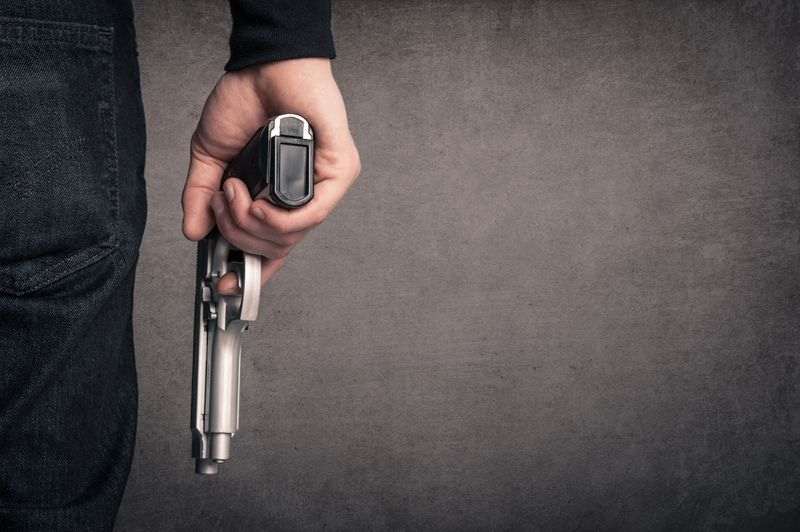
As the debate over gun control continues to rage in the United States, citizens who own guns struggle to keep up with the changing political landscape and changing laws. The questions are endless.
Who can purchase firearms? What type can be purchased? Can I carry a concealed firearm?
For many people, the most important questions are those related to the use of deadly force, including an understanding of Nebraska self-defense laws and gun laws in Nebraska.
An Omaha criminal lawyer explains when you can use deadly force to protect yourself in Nebraska.
Nebraska Self-Defense Laws
Nebraska’s Castle Doctrine allows people to use reasonable force, including deadly force, to defend themselves against intruders in a home or workplace without retreating. Nebraska does not follow a Stand Your Ground law, so people generally have a duty to retreat before using force in public places.
Because of the way in which our country is structured, each individual state governs the use of self-defense, and specifically of deadly force, within the state.
For Nebraska self-defense laws, Nebraska Revised Statute Section 28-1409 governs the use of self-defense in general. That statute reads, in pertinent part, as follows:
“the use of force upon or toward another person is justifiable when the actor believes that such force is immediately necessary for the purpose of protecting himself against the use of unlawful force by such other person on the present occasion.”
Nebraska also allows the use of force to protect another person when the other person would be justified using force under the above statute and you believe the use of force is necessary to protect the person.
When analyzing the elements in the use of force statute, it is particularly important to focus on two of those elements – “immediately necessary” and “present occasion.”
The first element, “immediately necessary,” stresses the urgency of the situation when contemplating the use of force. In other words, the law only allows you to use force if you must do so right then or risk injury.
The other element, “present occasion,” effectively precludes the use of force if a threat was made on a previous occasion instead of now.
For example, imagine that you had an encounter with a neighbor last week during which the neighbor made threats or even pushed you.
You then run into him again today; however, today he says and does nothing other than give you the “evil eye.” Because he did not actually do anything today, the use of force would not be allowable.
In addition, anytime force is used, the amount of force used must be proportionate and reasonable.
For example, if you find yourself in an altercation and the other party does nothing more than push you, the law would not likely uphold a claim of self-defense if you pulled out a baseball bat and hit the person repeatedly with the bat.
Can You Shoot a Home Intruder in Nebraska?
In Nebraska, you can use deadly force against a home intruder if you believe it’s necessary to protect yourself or others from harm. This is part of Nebraska’s self-defense laws, allowing force for self-protection or protection of others when someone unlawfully tries to enter your home.
When Can I Use Deadly Force in Nebraska?
In Nebraska, deadly force is justified in self-defense if a person reasonably believes they are in danger of death or serious harm. Even if they are mistaken about the threat, the belief must be based on reasonable grounds. (State v. Miller, 281 Neb.)
Is Nebraska a “Stand My Ground” State? Do I Have a Duty to Retreat?
Nebraska does not have a stand-your-ground law. Its self-defense laws are codified under Nebraska Revised Statutes, requiring individuals to retreat when safely possible before using force. States with stand-your-ground laws provide justified use of force as a defense against both criminal and, in some cases, civil liability.
In legal terms, this is usually referred to as. the “duty to retreat” and applies to situations where retreating would avoid the confrontation.
The State of Nebraska does impose a duty to retreat unless you are at your own home or place of work.
Even then, you may have a duty to retreat if you were the initial aggressor or you are attacked in your workplace and the assailant also works there.
As you may well imagine, the legality of the use of force, and specifically the use of deadly force, under a claim of self-defense can be a very complex and convoluted analysis.
What Happens After You Use Deadly Force in Nebraska?
If you have used deadly force in Nebraska, the legal process moves quickly regardless of circumstances:
- Law enforcement treats it as a crime scene first. Even in a clear self-defense situation, police secure the scene, collect evidence, and take statements. You have the right to remain silent — what you say in those first moments can significantly affect how your case unfolds.
- The burden of proof matters. In Nebraska, once self-defense is raised as a defense, the prosecution must prove beyond a reasonable doubt that the use of force was NOT justified. This is a high burden — but only if your defense is properly asserted and supported by evidence.
- A charging decision typically follows. The county attorney reviews evidence and decides whether to file charges. This review can take days to weeks. Having an attorney involved during this window — before charges are filed — can make a material difference.
- Physical evidence disappears fast. Surveillance footage gets overwritten, witness memories fade, and the scene changes. An attorney who gets involved immediately can preserve evidence that supports your self-defense claim.
Nebraska vs. Stand Your Ground States: What’s the Real Difference?
Unlike Stand Your Ground states such as Iowa and Wyoming, Nebraska law requires you to retreat if you can do so with complete safety when you are in a public space outside of your home or workplace.
Here’s what that means practically:
- In a Stand Your Ground state: If you are lawfully present anywhere and feel threatened, you may use force without first attempting to retreat — even in a public space.
- In Nebraska: If you are in a public space and can safely walk away, you are legally required to do so first. Using force without attempting to retreat could expose you to criminal charges even if the threat was real.
The critical phrase is “complete safety.” Nebraska only requires retreat if you can do so safely. If retreating would put you in greater danger, the duty to retreat may not apply. This is a fact-specific determination courts analyze case by case.
As of 2026, Nebraska has not passed a full Stand Your Ground law, despite the topic being debated in the legislature on multiple occasions.
Whether Nebraska’s duty to retreat applies to your specific situation depends entirely on the circumstances. Call Petersen Law at (402) 509-8070 for a case-specific conversation.
Frequently Asked Questions About Nebraska Self-Defense Laws
Is Nebraska a Castle Doctrine state?
Yes. Nebraska follows the Castle Doctrine, which means you have no duty to retreat before using force — including deadly force — if you are in your own home or workplace, and you are not the initial aggressor. Outside these locations, Nebraska’s duty to retreat still applies.
Can I carry a gun in Nebraska without a permit?
Nebraska is a Constitutional Carry state, having removed the permit requirement for concealed carry in 2023. However, certain locations remain off-limits regardless of permit status — including schools, courthouses, and some government buildings. Local firearm ordinances in Omaha and Lincoln may also apply.
What is the difference between justifiable homicide and murder in Nebraska?
Justifiable homicide occurs when the use of deadly force meets the legal requirements of Nebraska’s self-defense statutes — the threat was immediate, the belief of danger was reasonable, retreat was not safely possible or the incident occurred in a protected location, and the force used was proportionate. Murder involves the unlawful taking of a life without legal justification. The line between the two is determined by the specific facts of each case.
What if I was wrong about the threat — can I still claim self-defense?
Nebraska recognizes an honest and reasonable mistake standard. A defendant’s use of deadly force may be justified if a reasonable ground existed under the circumstances for the belief that they faced death or serious bodily harm — even if the defendant was mistaken about the extent of the danger. Whether the mistake was “reasonable” is determined by the jury based on all circumstances.
Contact an Omaha Criminal Defense Lawyer at Petersen Law Office
If you have used deadly force in the State of Nebraska, it is in your best interest to consult with an experienced Omaha criminal lawyer immediately about the specific facts and circumstances of your case.
Contact an Omaha criminal defense attorney at Petersen Law Office 24 hours a day at (402) 275-1171 to discuss your case with an experienced defense lawyer.

Attorney Petersen was invited to join the National Advocacy for DUI Defense (NAFDD) organization in 2013. NAFDD vets thousands of lawyers and only chooses those who have achieved stellar results in DUI defense cases. Attorney Petersen was named one of the Top 50 defense attorneys in Nebraska out of more than 5,000.