
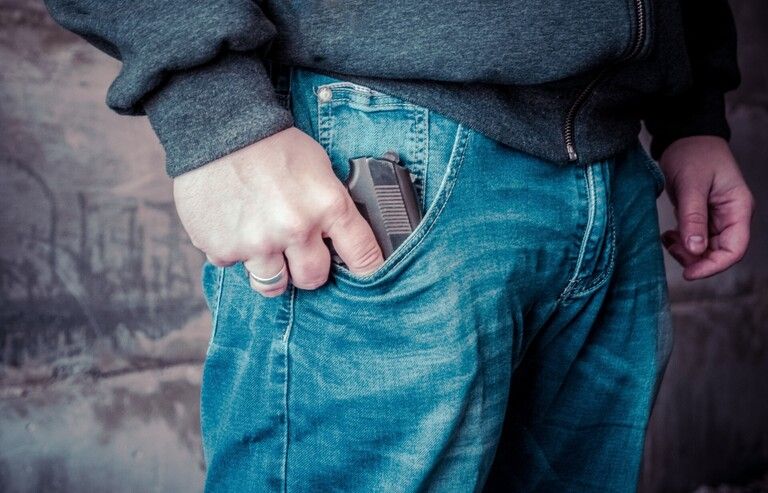
When it comes to possession of a firearm while intoxicated, Nebraska has some of the most liberal firearm laws in the United States.
However, these laws do not come without some limitations. Below we discuss the penalties for carrying a firearm while intoxicated and whether those have changed since the 2023 permitless carry law went into effect.
Charged with a firearms offense in Nebraska? Get trusted legal help now—call Omaha Firearms Crimes Attorney at (402) 509-8070 or contact us online for a free consultation.
Penalties for Possession of a Firearm While Intoxicated
Possession of a firearm while intoxicated is not a crime under Nebraska state law unless you conceal your weapon. Prior to 2023, you were required to have a carry permit to conceal your firearm and whether you possessed a carry permit or not would influence your potential penalties.
Now, the law allows most adults to carry concealed handguns without needing a permit. Specifically, residents at least 18 years old and not otherwise disqualified may carry a concealed handgun without a concealed carry permit.Therefore, you can no longer be penalized simply for carrying a concealed weapon.
However, individuals are still subject to criminal penalties for possessing a concealed firearm while consuming alcoholic beverages or other intoxicating substances unlawfully obtained.
Does the New Law Change the Penalties for Carrying a Firearm While Intoxicated?
Although the law revised who may carry a handgun, it did not alter the criminal penalties for possessing a firearm while intoxicated. Those consequences remain in full force. The law continues to prohibit firearm possession by anyone consuming alcohol, regardless of permit status. Individuals charged with this offense may also face future restrictions on their firearm rights.
Carrying a concealed weapon while under the influence of alcohol or controlled substances is still a Class III misdemeanor for a first offense and Class I misdemeanor for a second offense.
Legal Definition of Intoxicated
These penalties apply even if you are not “drunk.” All that is required is that you have any amount of alcohol in your system.
When it comes to other drugs, the rule is the same with one exception. You are not considered “intoxicated” for carrying firearms while under the influence of a legal substance such as a prescription drug.
How the Law Impacts Local Ordinances
Under LB 77, Omaha and other cities retain limited authority to prohibit firearms. While the law prevents municipalities from enforcing general restrictions or requiring registration, it permits them to prohibit firearms on property they control. This includes:
- City government buildings,
- Local parks,
- Trails and recreational facilities, and
- Other property owned by the city.
Omaha has already implemented such a ban, restricting firearm possession on its premises. However, the city may not go beyond this scope or introduce broader limitations that conflict with state law.With that said, a case currently pending before the Nebraska Supreme Court may influence how broadly cities can regulate firearms on public property.
Firearm owners filed a lawsuit seeking to overturn a similar ordinance banning concealed weapons on city-owned land. Oral arguments took place in April 2023, and the decision is expected to clarify whether individuals must first violate a law before they have standing to challenge the constitutionality of such ordinances.
Facing Gun Crime Charges in Omaha? We’re Here to Help—Get the Ball Rolling Today
The Nebraska criminal justice system is harsh and sometimes brutal. Nebraska prosecutors are extremely aggressive when it comes to firearms violations. Don’t try to represent yourself, and don’t seek out an inexperienced lawyer.
If Nebraska has charged you with any sort of firearms violation, call the Peterson Law Office at (402) 509-8070 or contact us online for a free initial consultation. We know the Nebraska criminal justice system inside and out, and we are familiar with all the major players.

Attorney Petersen was invited to join the National Advocacy for DUI Defense (NAFDD) organization in 2013. NAFDD vets thousands of lawyers and only chooses those who have achieved stellar results in DUI defense cases. Attorney Petersen was named one of the Top 50 defense attorneys in Nebraska out of more than 5,000.

 Loading...